This Week in Masonic History·September 21 to September 27, 2026
His Father's Lodge: Sul Ross and the Work of Repair
Lawrence Sullivan Ross was born on September 27, 1838, in Iowa Territory, and was a Texan before his first birthday. He grew up in Waco Village, where his father helped raise a Masonic lodge so new that the Grand Lodge chartered it without ever seeing its minutes, and in 1861, by the lodge's own record, he was made a Master Mason there. Ranger, Confederate general, sheriff, framer of the Constitution of 1876, governor, and at last president of a struggling agricultural college, Ross spent his life taking charge of things other men had begun and making them hold. A week about inheritance and repair, and about telling a brother's story whole.
On Wednesday afternoon, January 21, 1852, a committee of the Grand Lodge of Texas reported on the lodges that had been working under dispensation and were now asking for charters. One of them met on the Brazos, at a place the returns would call Waco Village. The committee was not impressed with the paperwork. The brethren there had reported dues of thirteen dollars when they owed six dollars and fifty cents, and they had sent up no minutes at all. “There are no proceedings from said Lodge before your Committee,” the report says, and then, in the next sentence: “We recommend a Charter to said Lodge.”
So Bosque Lodge, No. 92, came into being on trust. A year later it was already petitioning the Grand Lodge for a donation toward a Masonic school, which the Committee on Petitions declined to recommend. The list of chartered lodges printed with the 1854 proceedings carries it as “Bosque, 92, Waco Village,” with the notation “no returns.” By 1855 the proceedings have begun to call it Waco Lodge, No. 92. It was a frontier lodge in every sense: earnest, under-documented, short of money, and already trying to build a school.
One of the men who helped raise it, by the lodge’s own account, was Shapley Prince Ross. The Handbook of Texas records him as a ranger under Jack Hays, the man who came to Waco for good in 1849, built its first hotel, became its first postmaster in 1850, and served as Indian agent from 1855 to 1858. It records that he was a Mason. It also records that he was a slave owner, and a history that means to be trusted says so. He had a son who was about eleven when the family reached Waco, and who had been born on September 27, 1838, at Bentonsport, Iowa Territory. The boy’s name was Lawrence Sullivan Ross. Texas would call him Sul.
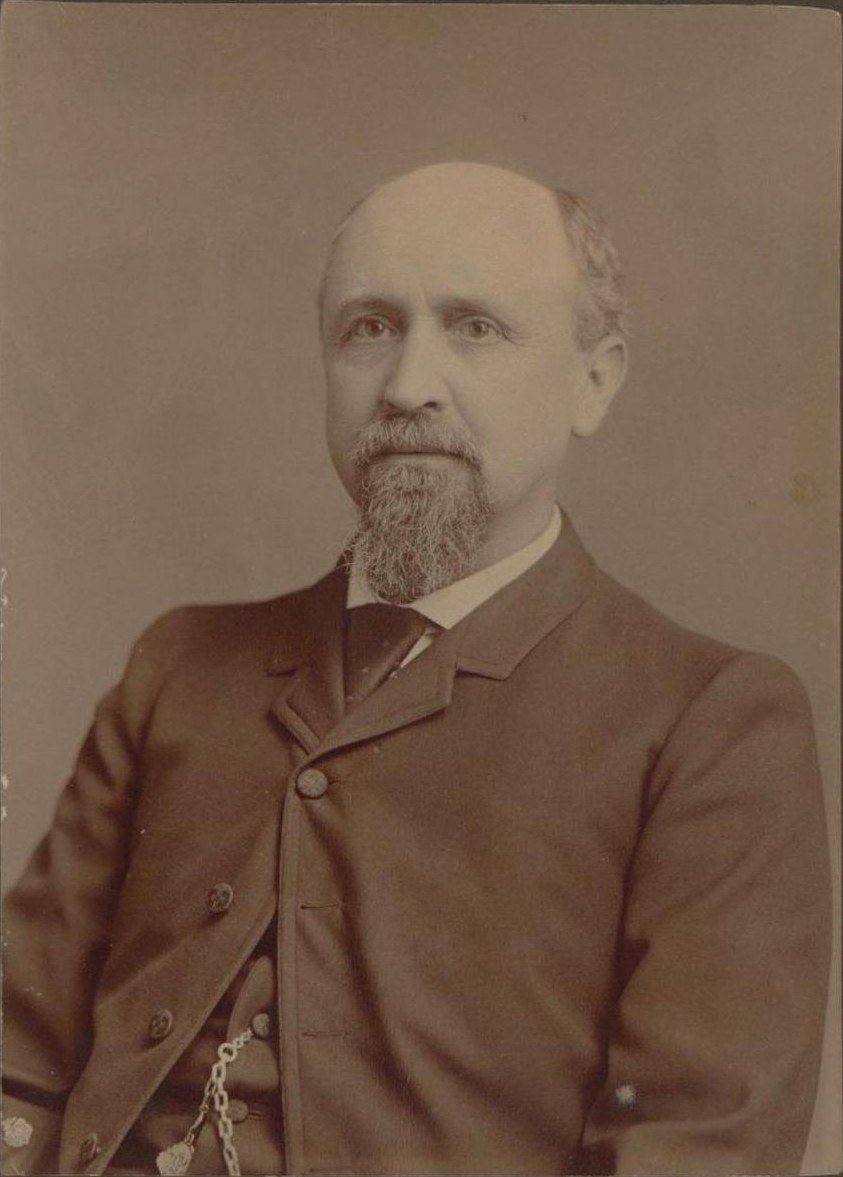
He wanted to be a ranger like his father, the Handbook says, but he recognized the value of an education, and went first to Baylor at Independence and then to Wesleyan University at Florence, Alabama. On vacation in the summer of 1858 he led a band of auxiliaries from the Brazos Indian Reservation on a United States Army campaign against the Comanches, and at the Wichita Village, in what is now Oklahoma, he took a wound that nearly killed him. He went back to Alabama and took his degree in 1859.
Then came the event that made him famous, and it has to be told straight. In 1860 Governor Sam Houston trusted the young ranger captain to raise a company of his own for the frontier around Young County. On December 18 of that year, Ross’s rangers attacked a Comanche hunting camp at Mule Creek, a tributary of the Pease River. Among the captives was a blue-eyed woman with an infant daughter who spoke no English. She was Cynthia Ann Parker, taken from her family’s fort as a child twenty-four years before. Texas celebrated her recapture, and the celebration carried Ross’s name across the state. The Handbook is careful to add what the newspapers left out: she had no desire to return. She tried more than once to flee back to her Comanche family, never saw her sons again, and was never reconciled to the world that had rescued her. Ross’s fame began in another person’s grief, and both of those things are true.
With the coming of the Civil War he resigned from the rangers. “He subsequently joined the Masonic order,” the Handbook says, and the lodge fills in the rest. Waco Lodge No. 92 records that Sul Ross became a Master Mason there in 1861, in the lodge his father had helped to form, where his brother Peter was also a member. The lodge’s earliest records were lost in a fire, it says, but its minutes survive from 1861 on, and the entry for his degrees is among them. He married Elizabeth Tinsley on May 28, rode off that summer in the Waco company his brother raised, and came home four years later a Confederate brigadier general, a veteran, by the State Library’s count, of 135 battles and skirmishes, with his health broken. He had been in Texas on furlough when his brigade surrendered at Jackson, Mississippi.
For eight years he farmed near Waco and mended. What came after is the part of the record that explains the man. In 1873 McLennan County made him sheriff, and in two years he helped found the Sheriffs’ Association of Texas. In 1875 he sat in the convention that wrote the Constitution of 1876, the document that governs Texas still, and one written, as the Handbook plainly puts it, to reverse Reconstruction. He went to the Senate in 1880 as a compromise candidate. He was elected governor in 1886 and again in 1888, and his second inauguration took place in the new Capitol. The State Library credits his terms with progress in the public lands, the regulation of railroads, and the founding of the state’s charitable institutions. The Farmers’ Alliance said his “essentially conservative” government served railroads and large ranchers better than the farmers who were going under. That is in the record too.
And then, in 1891, he took the hardest job anyone offered him. The Agricultural and Mechanical College of Texas was fifteen years old and had never found its footing. Its enrollment had once fallen from five hundred to about eighty; it fought the new university at Austin for every dollar. Ross left the governor’s office and went to College Station. “Under his presidency,” the Handbook says, “the number of students grew, many new buildings were built, and public faith in the institution returned.” In 1895 he turned down a seat on the Railroad Commission because it would have taken him away from the college. He died there, suddenly, on January 3, 1898. Texas A&M traces the first Silver Taps to the honors paid him that year. His body went home to Oakwood Cemetery in Waco, where, the lodge records, Waco Lodge No. 92 performed the Masonic service.
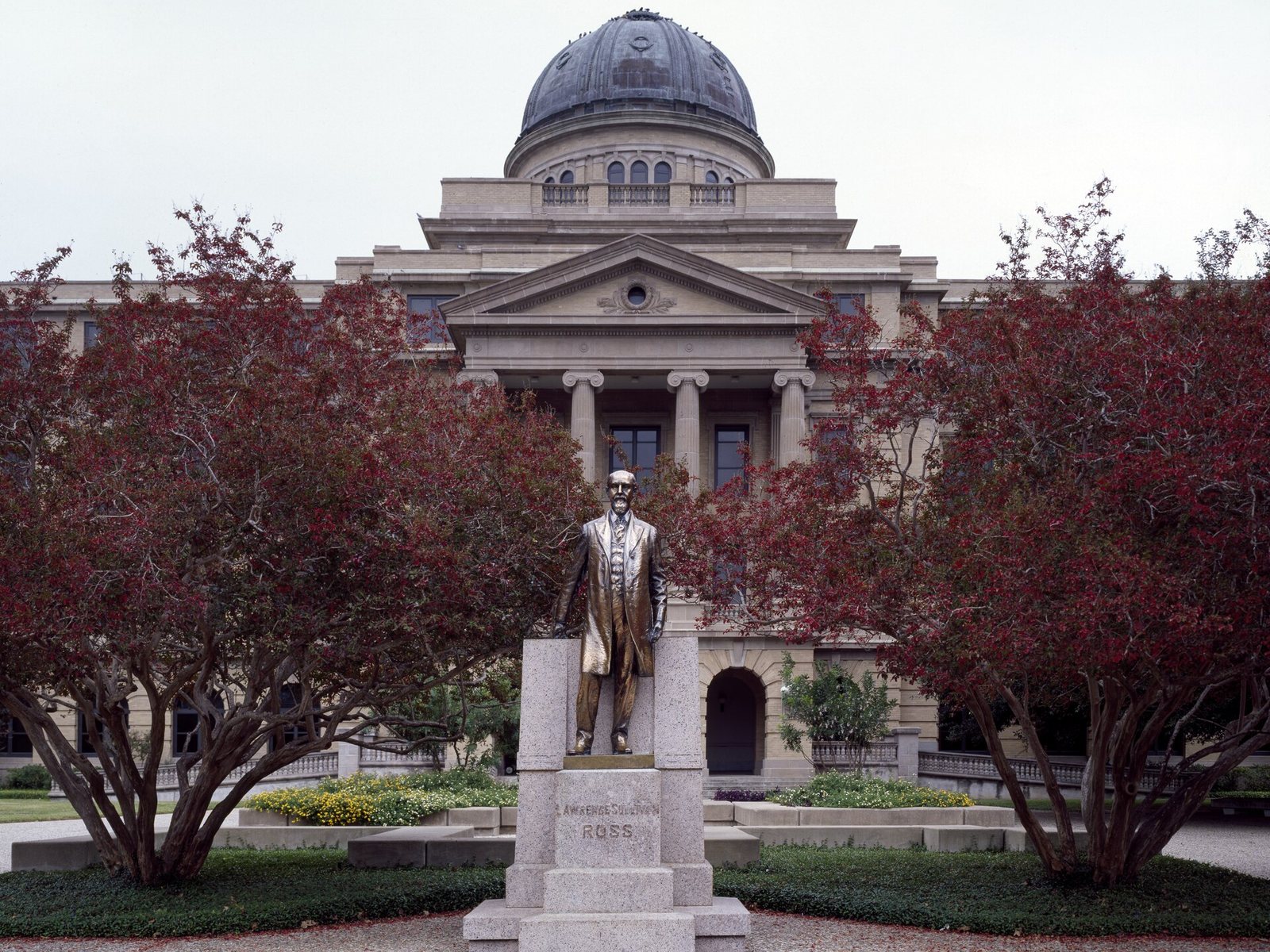
Notice the pattern. Sul Ross founded almost nothing. He was handed things: a lodge his father’s generation had started, a county’s peace, a state’s broken government, a Capitol under construction, a college the public had given up on. His gift was to take what other men had begun and make it hold. The honors came afterward and from other hands: a state college at Alpine authorized in his name in 1917, a statue dedicated on the campus in 1919, and, on December 4, 1947, a charter for Sul Ross Lodge No. 1300, formed at the direction of A&M’s president, Gibb Gilchrist, and by its own history the first lodge in Texas established on a college campus. Four years later Gilchrist was Grand Master of Masons in Texas.
Johnson City Lodge No. 561 received its charter from the same Grand Lodge on December 16, 1882, thirty years after Bosque Lodge received its own, in the years when Ross sat in the Texas Senate. We do not imagine our founders’ paperwork was much better than Waco Village’s. A lodge does not begin finished. It begins as a few men in a new town, a miscounted dues sheet, and a charter granted on trust, and it becomes something only if the sons and strangers who knock at its door afterward decide it is worth keeping. That is the unromantic center of the Craft. Few of us are asked to found anything. Nearly all of us are asked to inherit something, to repair what is worn, to hand it on stronger than we found it, and to tell the truth about the men who held it before us, the hard pages with the good. Sul Ross did the first three as well as any Texan of his century. The fourth is our part of the work.
Listen to This Story
6:26Read it here. Hear it anywhere.
Take the Story With You
Never miss a week.
Subscribe once and each new Texas Masonic history episode will arrive automatically in your podcast app.