This Week in Masonic History·August 17 to August 23, 2026
The Honest Ledger: Elisha M. Pease
Just past this week's edge falls the death of Elisha Marshall Pease — August 26, 1883 — the Connecticut clerk who kept the Republic of Texas's books, signed the 1854 school law that first funded Texas public education, and governed a state whose political generation was Masonic to its core. His own lodge membership rests on tradition; his ledger does not.
On August 26, 1883, Elisha Marshall Pease died after an attack of apoplexy and was buried in Austin, the city whose finest public buildings he had willed into existence. He was a twice-elected and once-appointed governor, yet almost nothing about him fits the pattern of a Texas hero. He never commanded troops in battle. He gave no famous speeches. What he did, from the age of twenty-three until the end of his life, was keep the books — honestly, exactly, and for everyone. That patient discipline, and what it built, is the story this week.
He was born in Enfield, Connecticut, on January 3, 1812, and reached Texas by early 1835, settling at Mina, now Bastrop. When the revolution came he was in it from the first hour: the Handbook of Texas records that he fought at Gonzales on October 2, 1835, in the skirmish that opened the war. But the revolution discovered almost immediately that what it needed from Pease was not his rifle. He became secretary of the committee of safety at Mina, then secretary to the General Council of the provisional government, and at Washington-on-the-Brazos he helped draft the constitution of the new Republic. While other men signed their names to Texas, Pease wrote out the fair copy.
The young Republic passed him from office to office the way a struggling firm clings to its one reliable clerk. He served as chief clerk of the navy and treasury departments, acting secretary of the treasury in the fall of 1836, and — after his admission to the bar in 1837 — the Republic’s first comptroller of public accounts. Statehood only deepened the pattern: representing Brazoria County in the first three legislatures, he wrote the Probate Code of 1846, the law under which Texans’ wills, estates, and guardianships would be ordered for generations.
His Brazoria years placed him at the center of the Republic’s Masonic geography, and this is where our story must be careful. Columbia, the first capital, was a lodge town: Grand Master Anson Jones issued the warrant that established St. John’s Lodge No. 5 there on June 8, 1838, and the lodge keeps its minute books from those years still. The fraternity saturated Pease’s entire political generation. The Handbook of Texas states it flatly: all of the Republic’s presidents, vice presidents, and secretaries of state were Masons, and between 1846 and 1861 five of the six governors of the new state belonged to the fraternity. Later summary lists place Pease himself on the rolls of St. John’s Lodge No. 5 — but that is where the trail thins. Neither the Handbook’s biography of Pease nor the standard Masonic references confirm his membership, and this series does not claim what the record does not show. We record the affiliation as tradition, hold it open for the Grand Lodge archives to settle, and let the verified history carry the week — because what is verified is remarkable enough.
Elected governor in 1853 and reelected in 1855, Pease did the thing no Texas executive before him had managed: he turned the state’s paper aspirations into funded institutions. On January 31, 1854, he signed the bill establishing the Texas public school system, and his administration created the permanent school fund behind it — set up, as the Texas State Library records, with $2 million in United States bonds from the Compromise of 1850 boundary settlement. Where Mirabeau Lamar, whose birthday this series marked last week, had endowed education in 1839 with land and principle, Pease endowed it with capital and interest. The two acts are halves of one long sentence: Lamar dreamed the schools; Pease paid for them. And the Masons of Texas were building alongside him — between 1850 and 1873 the legislature chartered seventeen Masonic-sponsored schools, and Texas lodges helped establish more than a hundred others in towns that had no other schoolhouse. Whatever Pease’s own relation to the lodge room, the lodge and the governor were at work on the same wall.
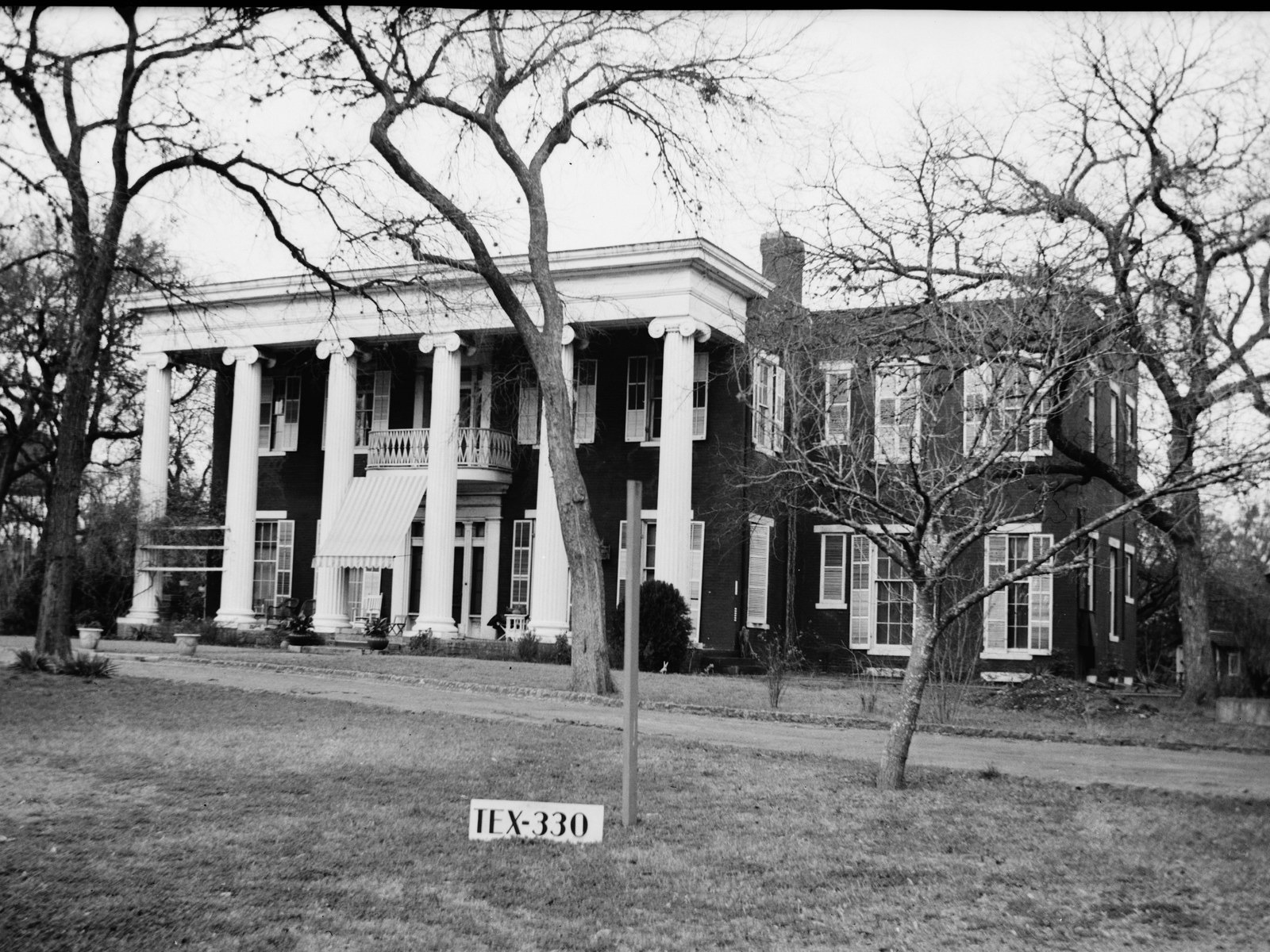
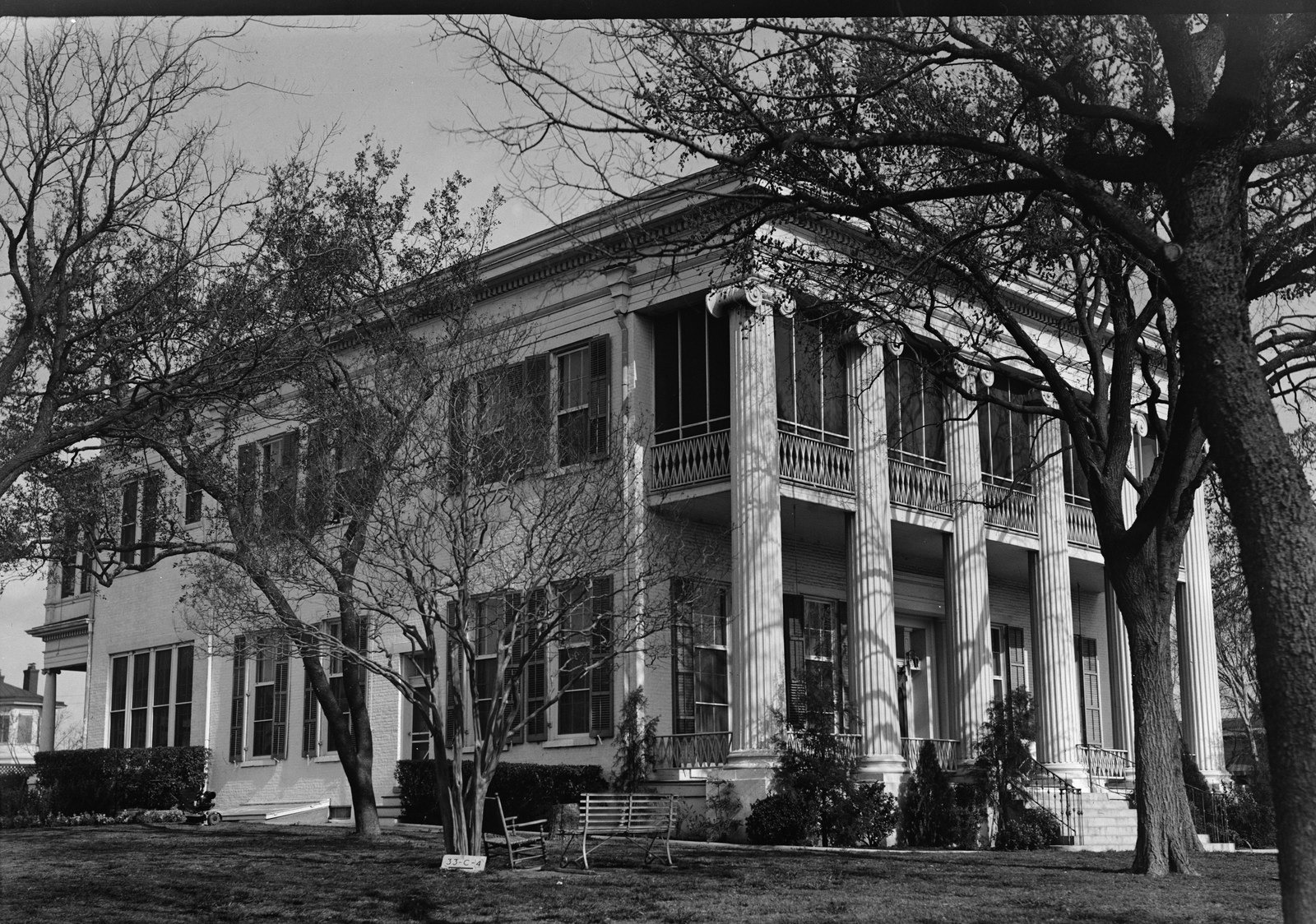
The building was literal, too. He settled the public debt, and the settlement freed money for the institutions a civilized state owes its weakest citizens — the asylums and the schools for deaf and blind Texans. Under his tenure rose the General Land Office building, a state orphans’ home, a new capitol, and the Governor’s Mansion itself, all begun while master builder Abner Cook’s Ionic columns were changing the face of Austin. Pease was the first governor to occupy the Mansion — and when he wanted a home of his own, he bought Woodlawn in 1859, the house Cook had finished in 1853 for state comptroller James B. Shaw. The Republic’s first comptroller, settling into a comptroller’s house: even his architecture balanced.
Then came the years that tested whether his honesty was a habit or a conviction. Pease aligned with the Unionists in 1859, and when Texas seceded he did not bend: he kept his Union loyalty quietly through the entire war, in a state where that stand ended friendships and careers. He lost the governor’s race of 1866, helped organize the Republican party in Texas in 1867, and that summer was appointed governor by General Philip Sheridan in Throckmorton’s place. Two years later he resigned rather than continue under military policies he could not square with his own judgment — surrendering power, twice in one decade, sooner than surrender his accounts of what was right. Texans who despised his politics kept trusting him with their arithmetic: president of the Tax-payers’ Convention of 1871, chairman of the Texas delegation to the Liberal Republican convention of 1872, and in 1879, by appointment of President Hayes, collector of customs at Galveston — a bookkeeper to the last.
For Johnson City Lodge No. 561, the summer Pease died is close to home. Our lodge had been chartered by the Grand Lodge of Texas only the previous December; when the news from Austin came in August 1883, the brethren of Johnson City were still in their first year of labor. Every free school that has opened in Blanco County from that year to this has drawn on the permanent fund Pease banked in 1854, just as it stands on the land Lamar set aside in 1839. Freemasonry teaches with the tools of the builder’s trade, but the craft has always known that walls are only as true as the accounts behind them — that the square must govern the ledger before it can govern anything else. Elisha M. Pease kept the ledger of Texas for half a century and handed it over balanced. Whether or not his name belongs in a lodge book, his work belongs to everything the lodges were building — and in Blanco County, the account he opened is still paying out.
Listen to This Story
5:55Read it here. Hear it anywhere.
Take the Story With You
Never miss a week.
Subscribe once and each new Texas Masonic history episode will arrive automatically in your podcast app.