This Week in Masonic History·August 3 to August 9, 2026
The Young Colonel: William Barret Travis
This week holds the birthday of William Barret Travis — August 9, 1809, by his family's Bible, though tradition long kept August 1 — the South Carolina-born, Alabama-raised lawyer, editor, and Mason of Alabama Lodge No. 3 who, at twenty-six, commanded the Alamo and addressed the most famous letter in Texas history to the people of Texas and all Americans in the world.
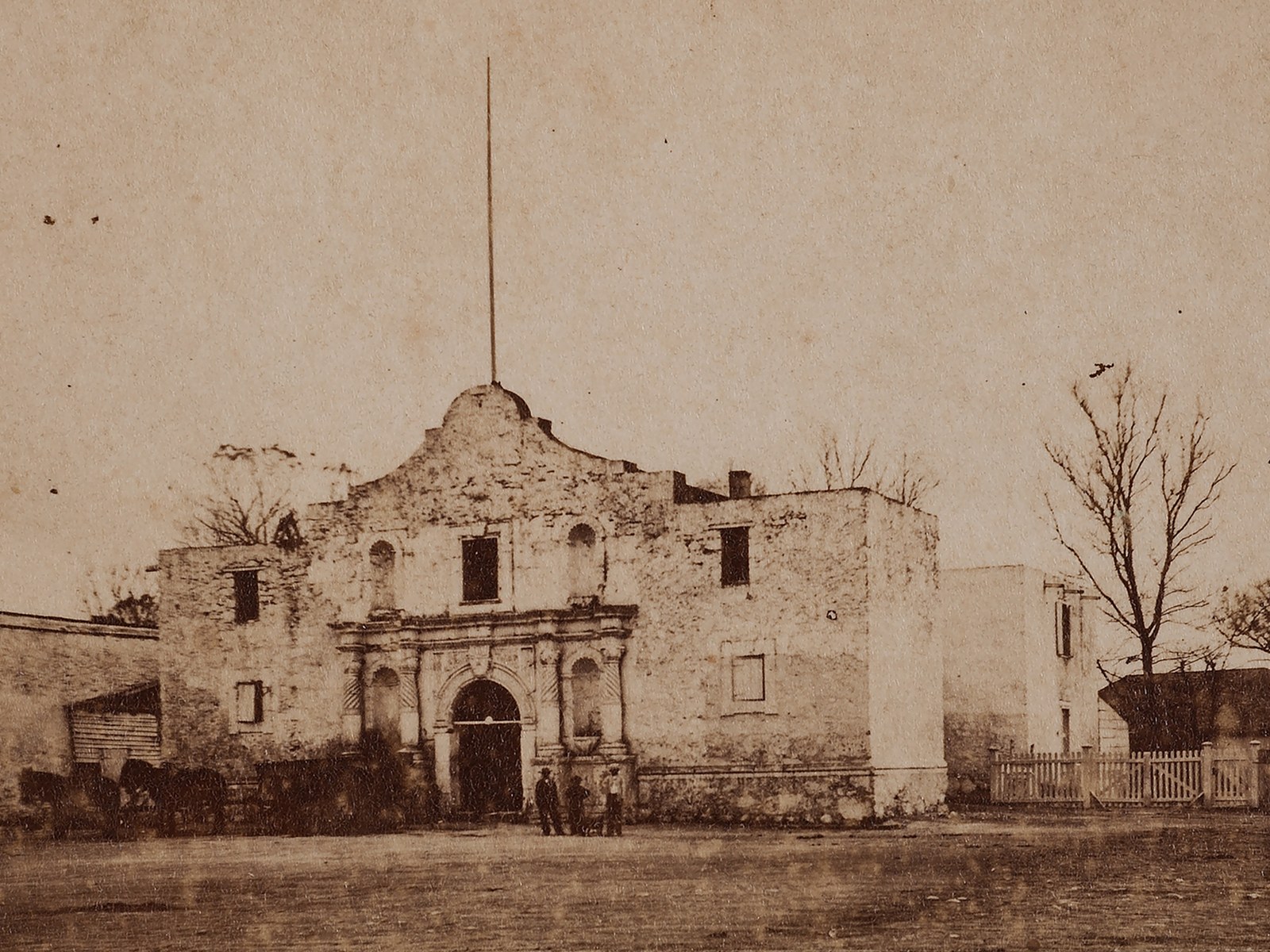

Even his birthday asks for a historian’s care. Tradition long gave August 1, 1809, and many books still do; but the Travis family Bible records August 9 — and the Handbook of Texas notes that the Bible’s date is the better-attested one. By the family’s own book, then, this week holds the birthday of William Barret Travis, born at Mine Creek in the Red Bank community of South Carolina’s Edgefield District, near present-day Saluda, the eldest of eleven children of Mark and Jemima Travis. The date may be argued; the arithmetic may not. Between that August day and the morning of March 6, 1836, he was given twenty-six years, and what he did with them made a ruined mission church in San Antonio into one of the permanent places of American memory.
The shape of his short life comes clear in Alabama. In 1818 the family followed his uncle, the Baptist preacher Alexander Travis, to Conecuh County, where they helped establish the communities of Sparta and Evergreen. The boy studied at the academy in Sparta, then at Claiborne, the busy cotton port on the bluffs of the Alabama River. And there, still in his teens, he began assembling a public life with remarkable speed. He apprenticed in the law under James Dellet, Claiborne’s leading attorney, and became his partner. He taught school, and on October 26, 1828 — at nineteen — married Rosanna Cato, one of his own former students; their son Charles Edward was born the next August. He began publication of a newspaper, the Claiborne Herald. He accepted a militia post as adjutant. And he joined the Masonic order at Alabama Lodge No. 3.
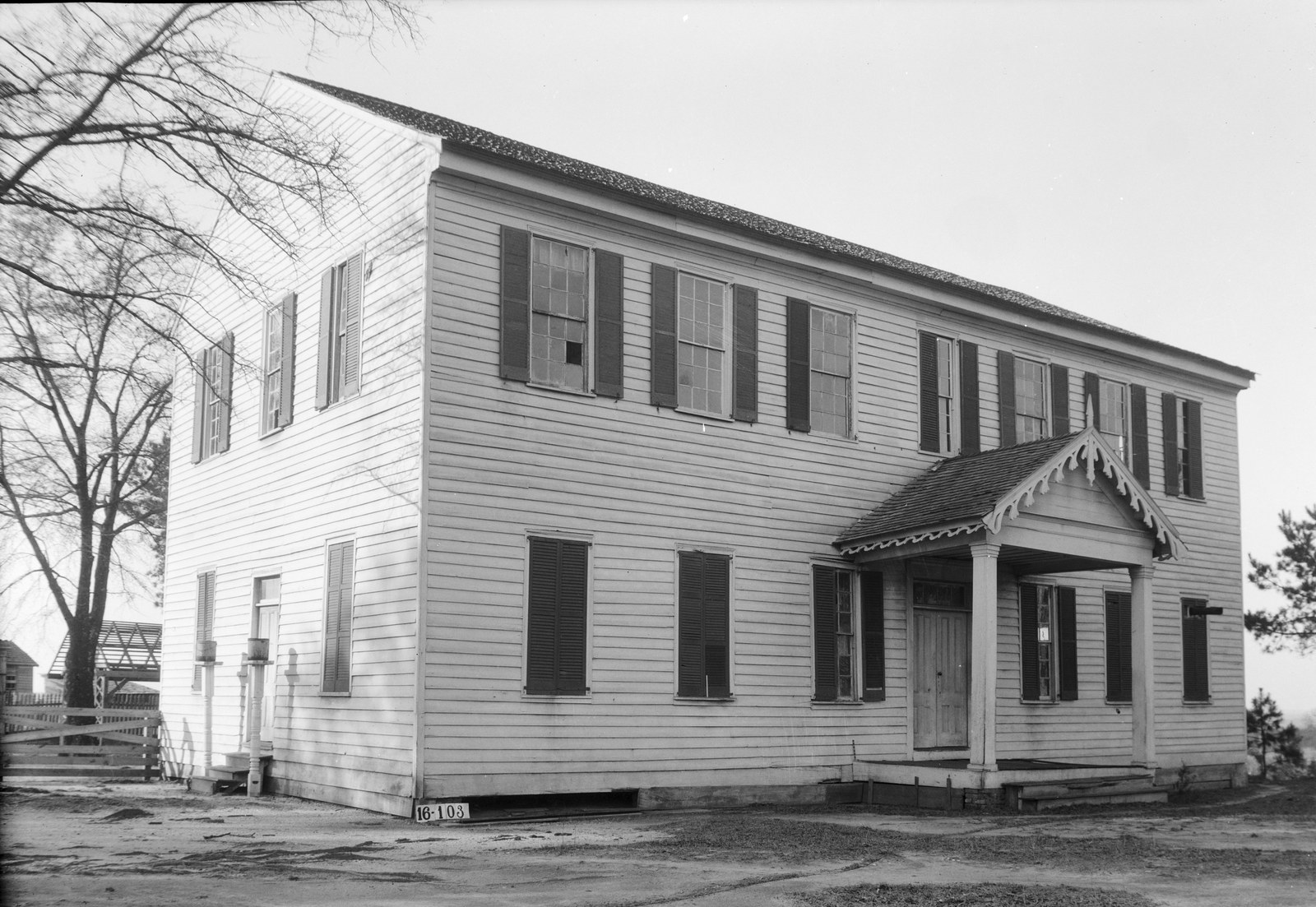
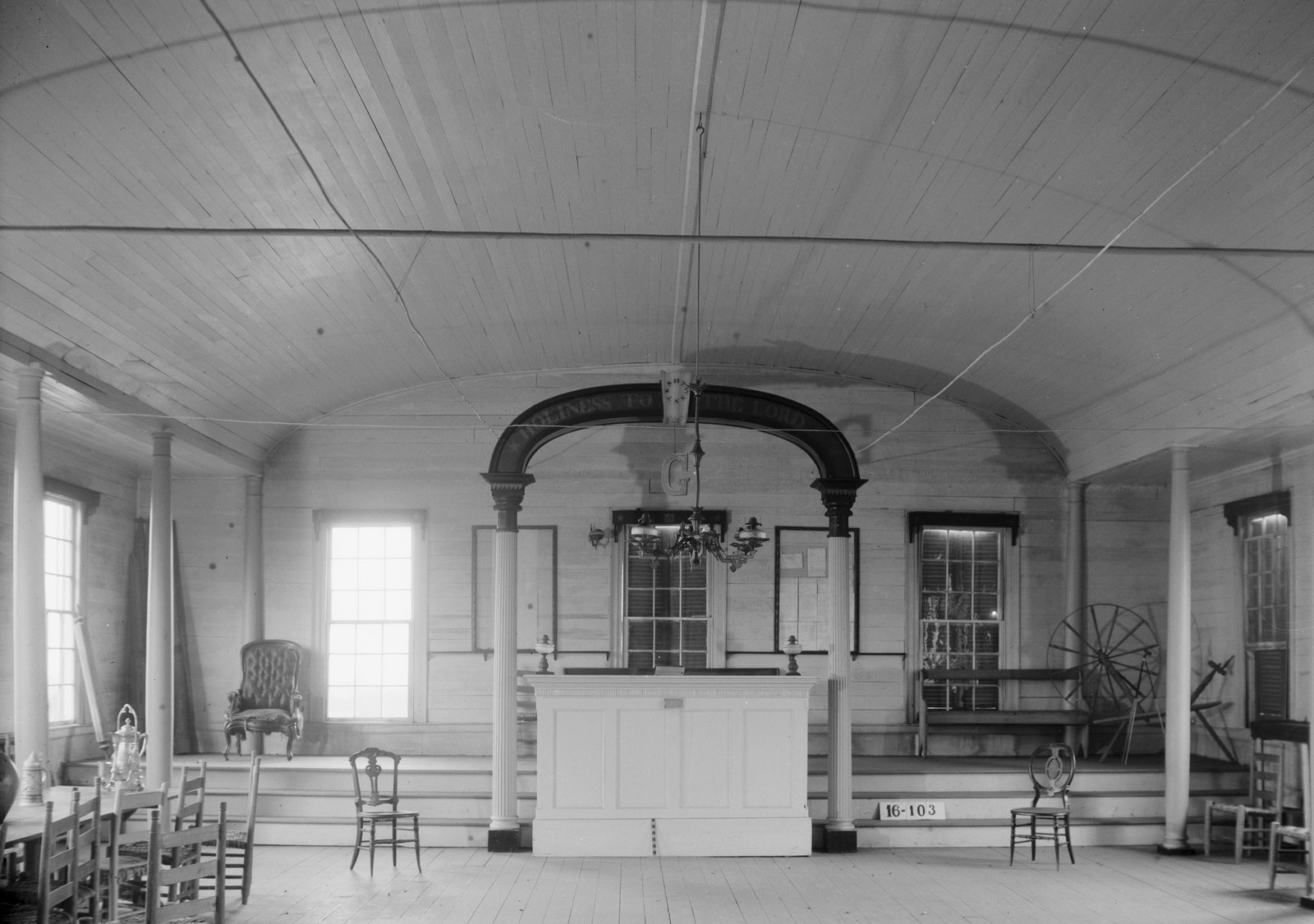
It is worth pausing on that list, because it is really one thing seen five ways. A young man with no fortune, on a raw cotton frontier, was building himself out of institutions — the bar, the press, the militia, the lodge — each of them a promise that order, learning, and mutual obligation could hold a new country together. Freemasonry was the oldest of those promises, and in Claiborne it had a house. The hall that served Alabama Lodge No. 3 was built in 1824, and it carried the whole weight of the town’s civic life: the lodge worked in the second-floor room, while the building below served at times as church and courtroom. When the Marquis de Lafayette came up the Alabama River on his great American tour in 1825, it was here that Claiborne received him. The Grand Lodge of Alabama still counts Travis among its notable Freemasons; he took his place in that lodge before he was twenty-two.
Then the life he had assembled came apart. By 1831 Travis was in debt, his marriage was failing, and he left Alabama alone — his daughter Susan Isabella would be born after his departure, and Rosanna’s divorce petition, charging desertion, followed in 1834. He arrived in Texas in early 1831, when the Law of April 6, 1830, had made such immigration illegal, and on May 21, 1831, obtained land from Stephen F. Austin. He was twenty-one years old and starting over with the same toolkit: law books and public duty. At Anahuac his practice collided with the Mexican commander John Davis Bradburn, who in 1832 arrested Travis and his partner Patrick Jack — the spark of the Anahuac disturbances that pushed the colonists toward their first conventions. He moved to San Felipe, was elected secretary of the ayuntamiento in 1834, and stood with the war party as the crisis deepened. In June 1835 he led some twenty-five men to expel the garrison at Anahuac; that autumn he served as a cavalry scout in the siege of Béxar; and in January 1836, commissioned lieutenant colonel, he rode to San Antonio to reinforce James C. Neill — and found himself, within days, in command of the Alamo when Neill took leave.
What followed belongs to the week of March 6, when this series keeps the anniversary of the battle itself. But one document belongs to Travis alone. On February 24, 1836, the second day of the siege, he wrote out a page addressed “To the People of Texas & All Americans in the World.” The original survives in the State Archives at Austin, and its sentences still carry the heat of the moment: “I am besieged, by a thousand or more of the Mexicans under Santa Anna … The enemy has demanded a surrender at discretion, otherwise, the garrison are to be put to the sword … I have answered the demand with a cannon shot, & our flag still waves proudly from the walls - I shall never surrender or retreat.” He closed with the three words by which the letter is known — “Victory or Death” — and Captain Albert Martin of Gonzales carried it through the enemy lines. The letter did its work: help gathered from across Texas and the United States, though not in time. Ten days later, in the assault before dawn on March 6, Travis died early in the fighting, felled by a single bullet. The defenders’ bodies were burned. The letter went back to his family, and in 1893 a great-grandson sold it to the State of Texas for eighty-five dollars; it is kept today by the Texas State Library and Archives Commission, a few blocks from the Capitol, in the seat of the county the Republic’s Congress created in January 1840 and named in his honor.
Texas Masonry has kept his memory in its own register. The rolls maintained by Texas Masonic institutions count Travis of Alabama Lodge No. 3 among the brethren who died at the Alamo, beside James Bowie of Loge L’Humble Chaumière No. 19 at Opelousas, David Crockett — whose lodge is unrecorded, though his Masonic apron was preserved by a Tennessee family — and James Bonham, whose South Carolina records burned in 1838. For some of these men the documentation is fragmentary, and honesty says so; for Travis, the record stands firm. And the fraternity’s answer to the loss was characteristic: it moved in and went to work. A decade after the battle, San Antonio’s Masons organized Alamo Lodge No. 44 within the walls of the old mission itself, and that lodge has worked continuously under its 1848 charter ever since — labor taken up in the very rooms where labor had ended.
For Johnson City Lodge No. 561, chartered by the Grand Lodge of Texas on December 16, 1882, Travis sits close to home in more ways than one. Austin, where his letter rests, is the seat of Travis County, one county east of our own Blanco hills; a Johnson City Mason driving to the capital passes into a county named for a brother who was raised in a frontier lodge room before his twenty-second birthday. That may be the part of his story the Craft is best fitted to keep. The world remembers the rhetoric; a lodge remembers the obligation underneath it — a young man who bound himself, freely and in advance, to answer for others, and who wrote from inside the walls that he would never forget what was due to his own honor and that of his country. He addressed that promise to the people of Texas and all Americans in the world. We are among its addressees still.
Listen to This Story
6:46Read it here. Hear it anywhere.
Take the Story With You
Never miss a week.
Subscribe once and each new Texas Masonic history episode will arrive automatically in your podcast app.