This Week in Masonic History·July 27 to August 2, 2026
The Stonemason's Son: Thomas J. Rusk
This week marks the death of Thomas J. Rusk on July 29, 1857 — the stonemason's son who signed the Texas Declaration of Independence, fought at San Jacinto, commanded the army, presided over annexation, and helped found the Grand Lodge of Texas. He died holding the second-highest office in the United States Senate, and Texas has never fully reckoned with how much of its framework one man quietly built.
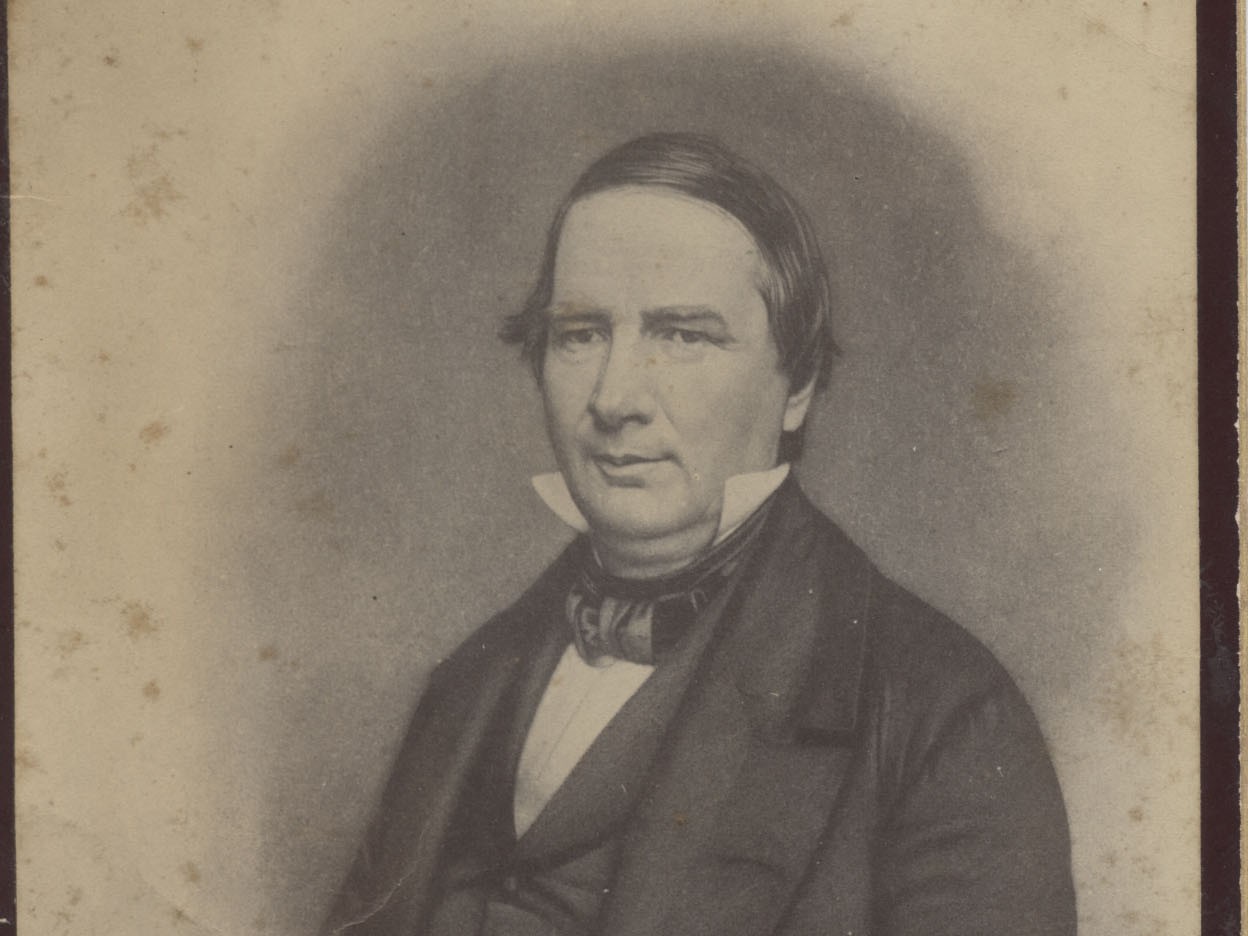
On July 29, 1857, at Nacogdoches, Thomas Jefferson Rusk died at fifty-three. At that moment he was, by formal rank, the most powerful Texan who had ever lived: a United States senator eleven years into his service, and since March 14 the president pro tempore of the Senate — the chamber’s presiding officer, an office the Senate’s own rolls show him holding through the last day of his life. Word of his death moved across Texas like a bell tolling. That November, Chief Justice John Hemphill stood in the hall of the Texas House of Representatives and delivered a formal eulogy, printed by order of the legislature, mourning him in the language of the mourner in Israel: how are the mighty fallen. Texas has produced louder men, and it has spent more memory on them. It has produced very few on whom more actual weight rested.
Rusk was born on December 5, 1803, in the Pendleton District of South Carolina, the son of an Irish stonemason — a detail worth holding onto, because the son would spend his whole life doing at the scale of institutions what his father did with stone. The family rented land from John C. Calhoun, and Calhoun saw something in the boy, helping him to a place in the district clerk’s office where he could read law. Admitted to the bar in 1825, Rusk settled in Clarksville, Georgia, married Mary Cleveland in 1827, and began to prosper — until the managers of a gold-mining venture he had invested in absconded with the company’s funds. Rusk chased the embezzlers all the way to Nacogdoches in 1834. He never recovered the money. Instead, in the oldest town in Texas, he found the work of his life: he stayed, took Mexican citizenship on February 11, 1835, and within a year the country he had adopted was in revolution.
What follows reads less like one career than like four. Rusk raised and drilled a company of Nacogdoches volunteers and marched to join the army. Sent as a delegate to the Convention of 1836, he signed the Texas Declaration of Independence and chaired the committee that revised the constitution of the new Republic. The ad interim government made him its Secretary of War in March 1836, at thirty-two years old — and he discharged the office from the field, fighting at San Jacinto on April 21. Two weeks later, command of the Army of the Republic of Texas passed to him, and he held it through that dangerous first autumn while the Republic’s independence was still a claim backed mainly by one afternoon’s battle. Twice, in 1837 and 1843, Texas elected him major general of its militia. Whenever the young Republic needed someone to hold the heaviest thing it had, it handed the thing to Rusk.
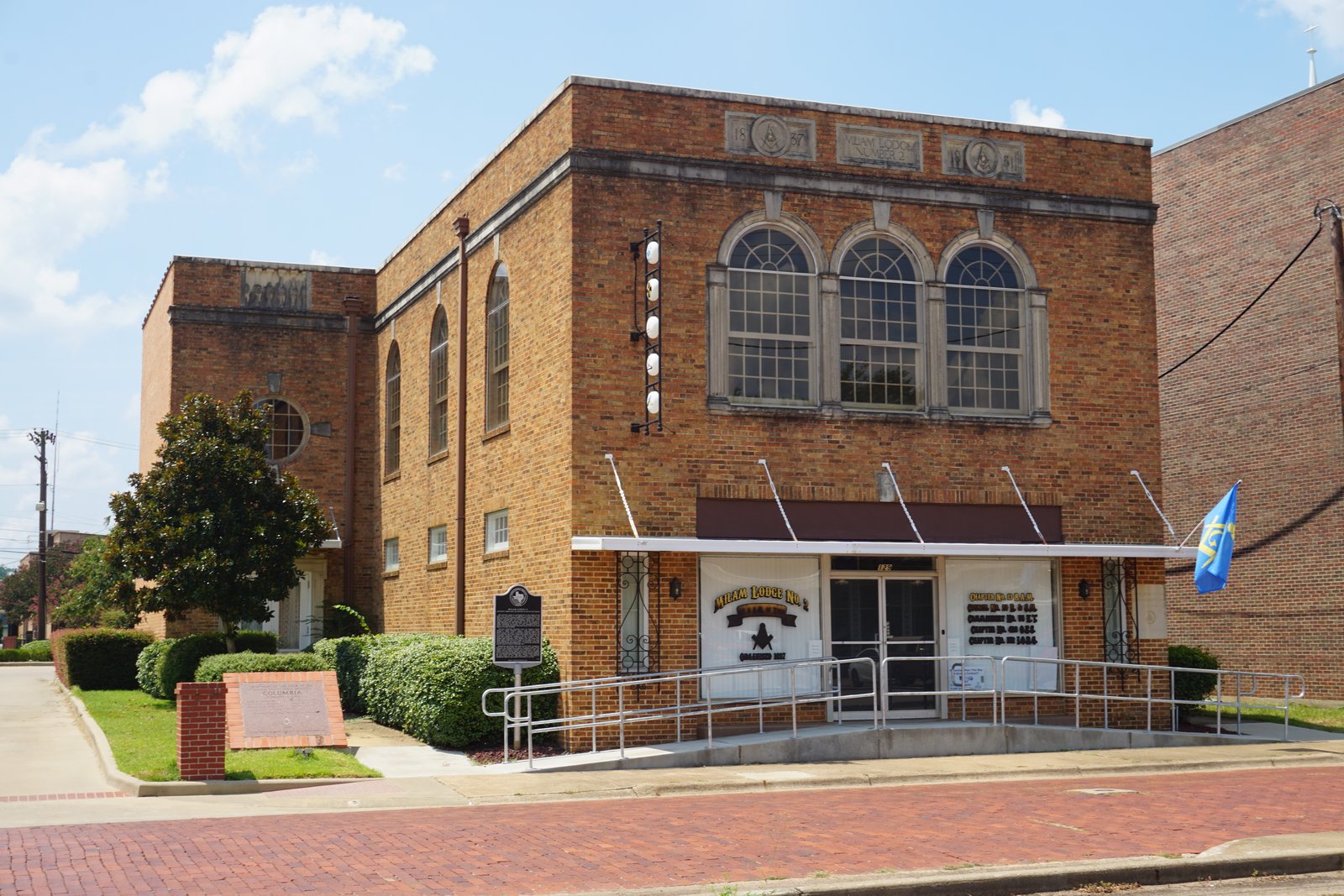
It is in the middle of this — 1837, between the war and the courts — that his Masonic record begins. On August 16, 1837, Milam Lodge No. 40 was organized at Nacogdoches under a charter from the Grand Lodge of Louisiana, with Haden Edwards as its first Master and Adolphus Sterne — the Nacogdoches merchant who had raised and financed two companies of volunteers for the Revolution — as its first secretary. Rusk was made a Mason in Milam Lodge that same year. He was not merely joining a club. That December, delegates of the Republic’s three lodges — Holland No. 36, Milam No. 40, and McFarland No. 41 — met at Houston to organize the Grand Lodge of the Republic of Texas, with President Sam Houston presiding and Anson Jones elected the first Grand Master. Rusk stands in the record as a founding member of the Grand Lodge of Texas. Within four months of taking his first degrees in a frontier lodge room, he was helping constitute the sovereign Masonic body of a nation. The pattern is the same one his whole life traces: he arrived, he was trusted, and he was immediately set to building.
The building continued in civil form. In December 1838 the Republic elected him chief justice of its Supreme Court, and in Milam County v. Bell he established that even public officers could be compelled by mandamus to do their legal duty — a quiet ruling that put the government of Texas under its own law. Returning to practice, he formed a law partnership with J. Pinckney Henderson in 1841 that became the most celebrated in the Republic. When Texans faced the decision of their generation in 1845, it was Rusk they chose to preside over the annexation convention that carried Texas into the Union. And when the first state legislature chose its two United States senators in February 1846, it sent Houston and Rusk — and it was Rusk, not Houston, who received the larger vote and the longer term. In Washington he did what he had always done: the unglamorous load-bearing work. As chairman of the Committee on Post Offices and Post Roads he improved mail service and drove postage rates down, and he argued year after year for a transcontinental railroad by a southern route — the infrastructure of a continent, argued for by a man who had come to Texas on horseback chasing thieves.
Then the weight found the one place he could not bear it. On April 26, 1856, Mary Rusk died of tuberculosis. Seven children had been born to them; five still lived, and the youngest were still young. Hemphill’s eulogy says what the record everywhere confirms — that her death “was a blow to his heart from which he never recovered.” Honors kept coming; the Senate elected him its presiding officer in March 1857; there was talk of higher office still. It did not matter. Despondent, and suffering from a tumor at the base of his neck, Rusk took his own life at Nacogdoches on July 29, 1857. His brethren and his neighbors laid him in Oak Grove Cemetery, where three other signers of the Texas Declaration of Independence also rest, and the State of Texas later raised a monument over him. A county and a town carry his name.
A lodge knows how to hold a story like this — better, perhaps, than public history does. Masonry’s central metaphor is the builder, and Rusk lived it as literally as any Texan ever has: an army held together, a court system given its spine, a Grand Lodge constituted, a state carried into the Union, all of it bearing his handwork the way a finished wall bears the mason’s. But the Craft has never pretended that builders are made of stone themselves. It teaches men to carry one another precisely because it knows the strongest carry the most, and often say the least about the load. Milam Lodge, now No. 2 on the Texas rolls, still labors in Nacogdoches where it made him a Mason; the fraternity did not strike his name or soften his story, and neither does this one. He was a brother; he built; he grieved; he broke. The record keeps all of it, with honor.
Johnson City Lodge No. 561 stands at the end of one of the lines Rusk helped lay out. When the Grand Lodge of Texas chartered our lodge on December 16, 1882, the charter came down from the institution constituted at Houston in December 1837 by the delegates of three frontier lodges — Milam among them, with its newest-made Mason from Nacogdoches standing as a founder. Every warrant in Texas descends from that work. When our lodge opens in Blanco County, a century and a half on, it works inside a house the stonemason’s son helped raise.
Listen to This Story
6:24Read it here. Hear it anywhere.
Take the Story With You
Never miss a week.
Subscribe once and each new Texas Masonic history episode will arrive automatically in your podcast app.