This Week in Masonic History·July 20 to July 26, 2026
Sam Houston's Long Road to Huntsville
This week marks the death of Sam Houston on July 26, 1863 — the Raven of the Cherokee, the victor of San Jacinto, the president who presided over the founding of the Grand Lodge of Texas, and the governor who gave up power twice in one week rather than break an oath. A look at the whole of an incredible, contradictory man, and how Masonic memory holds him.
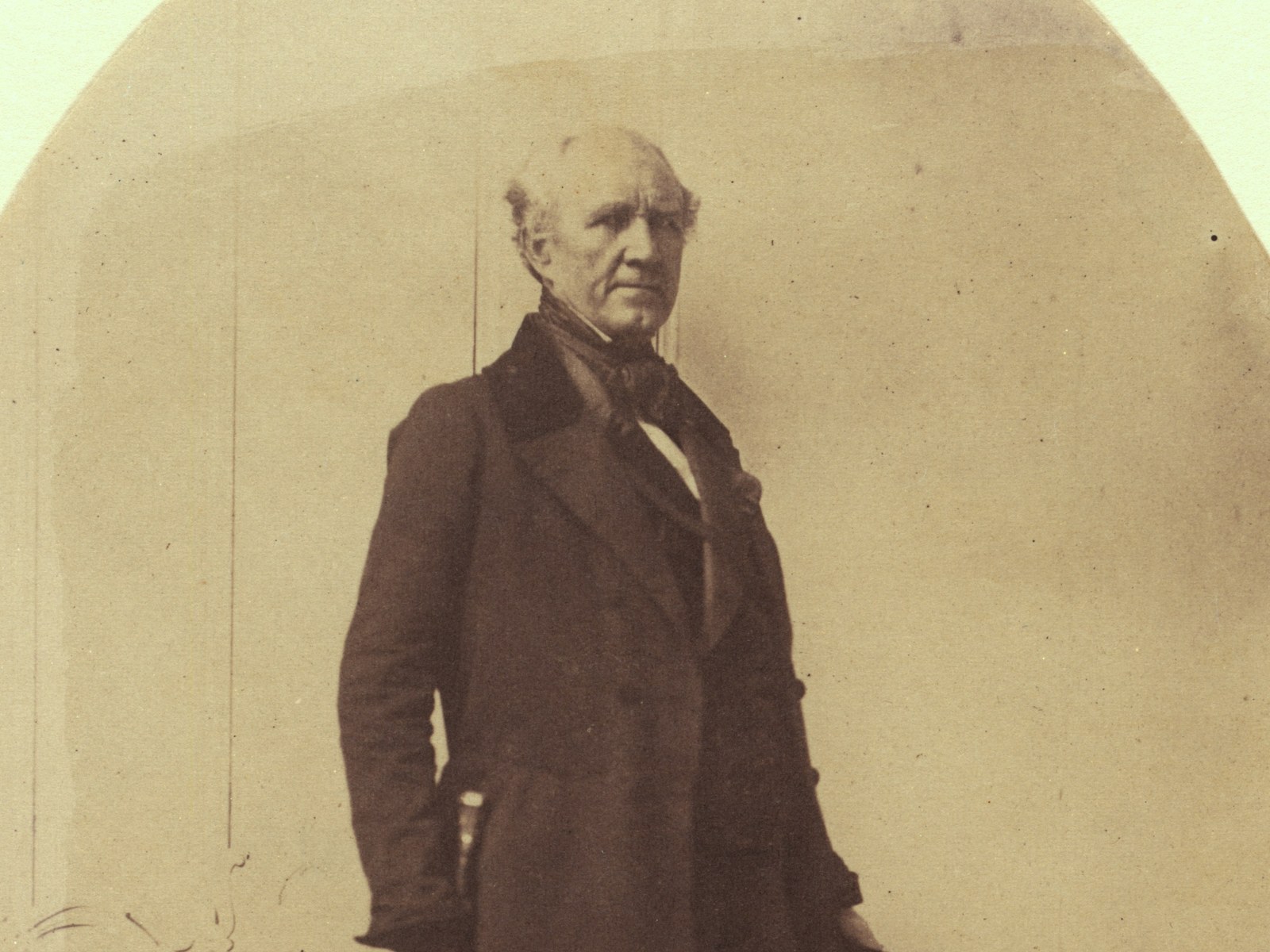

On July 26, 1863, in the downstairs bedroom of a rented house in Huntsville built to look like a riverboat, Sam Houston died of pneumonia at seventy. It was the third summer of a war he had spent the last strength of his life trying to keep out of Texas, and the state he had done more than any man to create had set him aside for it. The largest life in Texas history ended in a house he did not own, out of power and out of favor. And then Texas buried him, and the record notes what he wore: he was laid in Oakwood Cemetery dressed in Masonic ceremonial trappings. Strip everything else away — the offices lost, the crowds gone — and at the end, three things were still in the room: his family, his church, and the Craft.
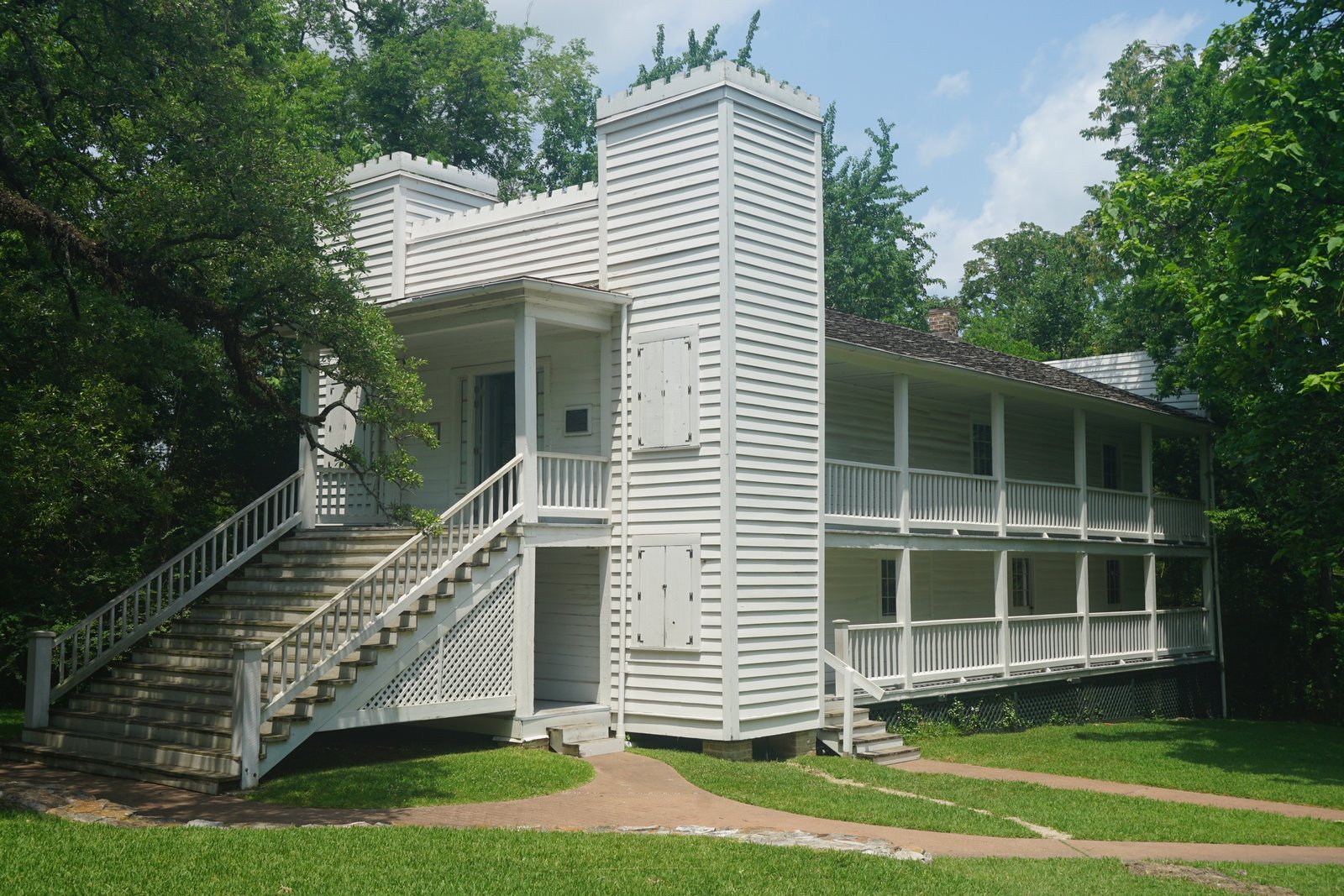
To understand why that detail matters, start with a fact about Houston that explains more of him than any battle: he spent his whole life joining sworn families. Born in Virginia in 1793 and raised on the Tennessee frontier, he ran off as a boy to live among the Cherokee, and the band of Chief Oolooteka adopted him outright, giving him the name Colonneh — the Raven. By the early 1820s, back in Nashville and rising fast, he was prominent in the city’s Masonic order. A wife’s family, an adopted nation, a lodge of brothers: none of these was given to him by birth. Houston chose his kin, and he chose them by oath. That is worth sitting with, because the great crisis of his life, forty years later, would turn on exactly one question — what a sworn obligation is worth when everything else is on fire.
First, though, he had to be ruined. In January 1829, at thirty-five and governor of Tennessee, he married Eliza Allen. Eleven weeks later, amid a mystery neither of them ever explained, the marriage was over. Houston resigned the governorship on April 16 and fled west across the Mississippi to the Cherokee — the family that had taken him in once before took him in again. The years that followed were dark enough that the record preserves the nickname he reportedly earned there: Big Drunk. By any accounting the man was finished — career gone, marriage gone, name gone. It is one of the astonishing facts of American history that the finished man was thirty-six, and everything for which the world remembers him had not yet happened.
What ruin taught Houston was risk. The man who crossed into Texas had already lost everything a man could lose socially and lived; that is precisely the man who can retreat for weeks in front of a hostile army, absorbing the fury of his own officers, waiting for the one afternoon worth spending an army on. It came at San Jacinto on April 21, 1836. Houston took a rifle ball just above the ankle in the charge; Santa Anna was taken the next day. And then came the act that tells you who he had become: with his own army raging for a hanging, Houston kept his prisoner alive — a dead tyrant was vengeance, but a live one could sign away Texas. Mercy, held under pressure, turned a battle into a republic. Texas made him its first elected president that fall, and would make him president again, senator for thirteen years, and finally governor.
In between came an act of building that this series regards as his most Masonic. In December 1837, delegates of the Republic’s three lodges met at the city that now bore his name to organize a Grand Lodge for Texas, and President Sam Houston presided over the convention, with Anson Jones — a future president of the Republic — elected first Grand Master. Consider what that meant. The Republic was a frontier nation with almost no institutions: courts barely functioning, no banks, no common schools, neighbors who had arrived from everywhere and knew nothing of one another. Masons were perhaps a percent and a half of the population, yet they filled some eighty percent of the Republic’s higher offices — every president, vice president, and secretary of state among them. Read rightly, that number is not about power hoarded; it is about trust manufactured. On a frontier, the lodge was the one credential that traveled — a stranger who could prove himself a brother had a known character, sworn obligations, and men who would answer for him. When Houston lent the presidency itself to that founding convention, he was building the Republic’s first piece of civic infrastructure. The state came first by weeks; the trust came from the lodge.
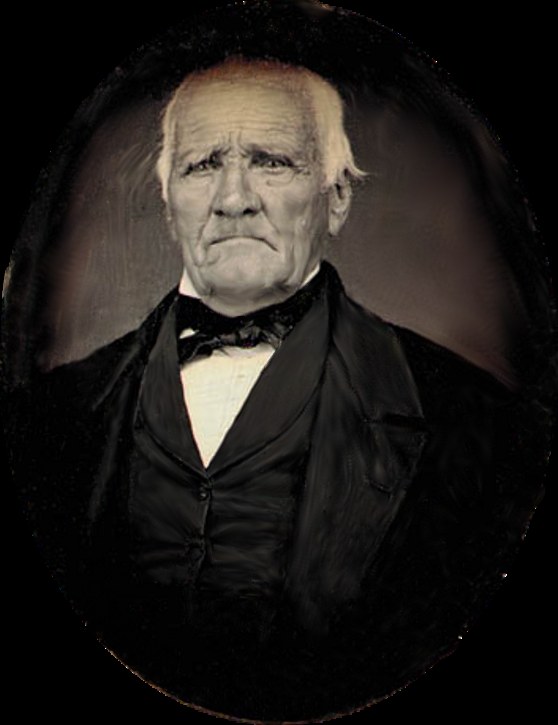
The later chapters belong to Margaret. Houston married Margaret Lea of Alabama, a devout Baptist half his age, and the record is unambiguous about what she accomplished: she restrained him, and above all she bridled the drinking that had nearly buried him once. In 1854 — after years of her patient insistence — the old Raven joined the Baptist Church. The wit of the frontier had its joke about the baptism reaching his pocketbook, but something real had happened: the man who had spent a lifetime swearing himself into families had finally been fully claimed by one. It matters to what came next. The Houston who faced 1861 was not the wild man of 1829; he was a man whose obligations had been organized, by a wife and a church and a Craft, into something like a settled soul.
Then Texas seceded, and the Secession Convention demanded that Governor Houston swear loyalty to the Confederacy. He refused. On March 16, 1861, the office was declared vacant — and here is where a Mason should slow down and look closely, because the popular version misses the point. Houston did not refuse because oaths sat lightly on him. He refused because they did not. He had sworn to the Constitution of the United States and to the constitution of Texas, and he would not lay a new oath on top of ones it would break. A man who treats obligations as furniture signs whatever is put in front of him; a man who has lived his whole life under the weight of sworn words knows there are some he cannot add. And then came the second refusal, greater than the first: Lincoln reportedly offered him troops to hold Texas, twice, and Houston turned them down rather than buy his office back with Texan blood. Twice in one week the most powerful man in Texas history laid power down. The first refusal was conscience; the second was love.
Two years later he was dead in the Steamboat House, and tradition holds that at the end his thoughts were of Texas and of Margaret. It would be easy to pour all of this into bronze and be done with him, and this series declines. He was heroic and vain, merciful and calculating, a slaveholder who defied the Confederacy, a wreck who rebuilt himself, a father of a nation who died in a rented room. Masonic memory is built for exactly such a man. The lodge does not carve statues; it records a brother — initiated, obligated, laboring, imperfect, present — and lets the whole record speak. On the level, the contradictions and the glories stand in the same room, the way they stood in the man.
When Johnson City Lodge No. 561 received its charter in 1882, Houston was nineteen years gone. But the charter came down from the Grand Lodge organized at that December 1837 convention he presided over — the same unbroken line of warrants and obligations that reached, in time, into Blanco County. Every stated meeting in Johnson City still sits at the far end of Sam Houston’s long road.
Listen to This Story
6:56Read it here. Hear it anywhere.
Take the Story With You
Never miss a week.
Subscribe once and each new Texas Masonic history episode will arrive automatically in your podcast app.